Shop tool
Sizeequivalence
Change format without changing overall diameter: enter the original size, read the gap for each equivalent, and see at a glance what we carry.
Original size
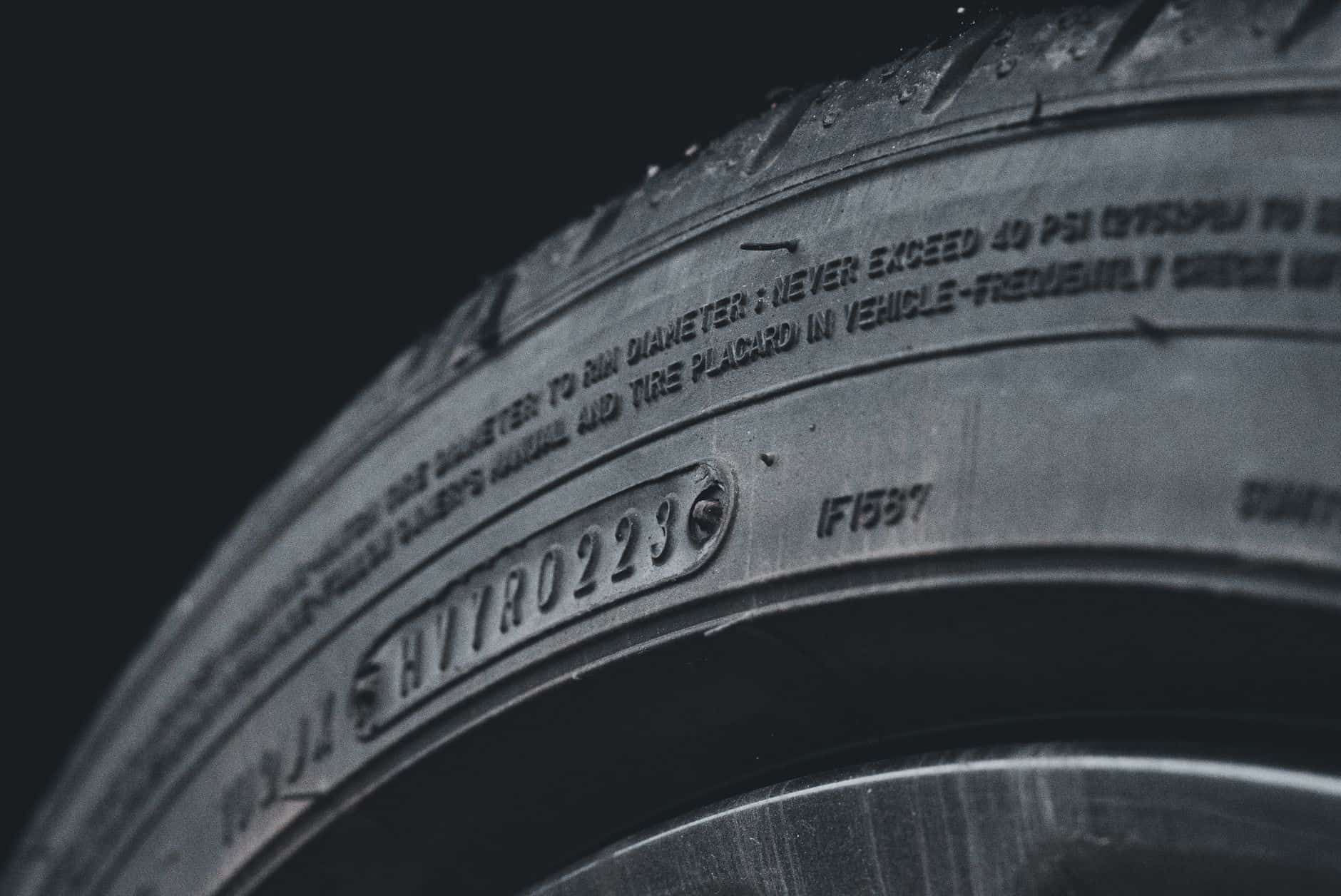
The three numbers moulded on the sidewall, in the order they appear.
205/55R15The table updates on every change.
What the original size measures
The four figures a shop checks before suggesting anything else.
- Overall diameter
- 23.88 in606.5 mm
- Circumference
- 75.01 in1905.4 mm
- Section width
- 8.07 in205 mm
- Revolutions per mile
- 845rev.
Sidewall height 112.8 mm
Usable mounting width 5.5 to 7.5 in
Usable mounting width is a shop rule of thumb, roughly 70 to 90% of section width. It is not a standard. The exact range is whatever the manufacturer publishes for that model.
Equivalent sizes
64 sizes whose overall diameter stays within 3% of the original, closest first.
How to read the gap
- Identical diameterUnder 0.01% gap: overall diameter matches the original exactly.
- Within toleranceUp to 2% gap: the tolerance the trade commonly accepts.
- For reference onlyBetween 2 and 3% gap: for reference only. Neither TRA nor ETRTO publishes an equivalence standard: 2% and 3% are two commercial conventions, and we show both rather than hide one.
| Size | Overall diameter (in) | Gap | Section width (in) | In our catalogue |
|---|---|---|---|---|
| 205/55R15Original size | 23.88 | 0%Identical diameter | 8.07 | Not carried |
| 175/50R17 | 23.89 | +0.05%Within tolerance · reads 100.0 km/h at a true 100 | 6.89 | Not carried |
| 225/50R15 | 23.86 | −0.08%Within tolerance · reads 99.9 km/h at a true 100 | 8.86 | Not carried |
| 195/45R17 | 23.91 | +0.13%Within tolerance · reads 100.1 km/h at a true 100 | 7.68 | Not carried |
| 185/75R13 | 23.93 | +0.20%Within tolerance · reads 100.2 km/h at a true 100 | 7.28 | Not carried |
| 175/65R15 | 23.96 | +0.33%Within tolerance · reads 100.3 km/h at a true 100 | 6.89 | Not carried |
| 225/45R16 | 23.97 | +0.40%Within tolerance · reads 100.4 km/h at a true 100 | 8.86 | Not carried |
| 195/65R14 | 23.98 | +0.43%Within tolerance · reads 100.4 km/h at a true 100 | 7.68 | Not carried |
| 215/40R17 | 23.77 | −0.45%Within tolerance · reads 99.5 km/h at a true 100 | 8.46 | Not carried |
| 215/65R13 | 24.00 | +0.53%Within tolerance · reads 100.5 km/h at a true 100 | 8.46 | Not carried |
| 195/70R13 | 23.75 | −0.54%Within tolerance · reads 99.5 km/h at a true 100 | 7.68 | Not carried |
| 185/55R16 | 24.01 | +0.56%Within tolerance · reads 100.6 km/h at a true 100 | 7.28 | Not carried |
| 225/55R14 | 23.74 | −0.56%Within tolerance · reads 99.4 km/h at a true 100 | 8.86 | Not carried |
| 185/60R15 | 23.74 | −0.58%Within tolerance · reads 99.4 km/h at a true 100 | 7.28 | See tires |
| 175/80R13 | 24.02 | +0.61%Within tolerance · reads 100.6 km/h at a true 100 | 6.89 | Not carried |
| 205/50R16 | 24.07 | +0.81%Within tolerance · reads 100.8 km/h at a true 100 | 8.07 | Not carried |
| 205/60R14 | 23.69 | −0.81%Within tolerance · reads 99.2 km/h at a true 100 | 8.07 | Not carried |
| 195/50R16 | 23.68 | −0.84%Within tolerance · reads 99.2 km/h at a true 100 | 7.68 | Not carried |
| 225/40R17 | 24.09 | +0.87%Within tolerance · reads 100.9 km/h at a true 100 | 8.86 | Not carried |
| 235/60R13 | 24.10 | +0.94%Within tolerance · reads 100.9 km/h at a true 100 | 9.25 | Not carried |
| 175/70R14 | 23.65 | −0.97%Within tolerance · reads 99.0 km/h at a true 100 | 6.89 | See tires |
| 225/60R13 | 23.63 | −1.04%Within tolerance · reads 99.0 km/h at a true 100 | 8.86 | Not carried |
| 215/45R16 | 23.62 | −1.09%Within tolerance · reads 98.9 km/h at a true 100 | 8.46 | Not carried |
| 215/60R14 | 24.16 | +1.17%Within tolerance · reads 101.2 km/h at a true 100 | 8.46 | Not carried |
24 of 64 sizes shown.
What a wrong diameter actually changes
Overall diameter is not a spec-sheet detail: it is what ties the tire to everything else on the car.
Odometer and speedometer
Both are calibrated for the original fitment. A smaller diameter adds distance that was never driven and shows a speed higher than the real one. The “Gap” column puts a number on it: 2% is 2 km/h of lying at 100.
Driver assistance calibration
Traction control, stability control, adaptive cruise and emergency braking all reason from how fast each tire turns. With a wrong diameter they keep acting, just at the wrong moment.
Bodywork and steering
A taller or wider tire can rub inside the arch, at full lock or under compression, without showing any sign of it while parked.
Drivetrain
A changed aspect ratio changes effective gearing. On a car that drives all four tires, two axles turning at different rates eventually get expensive.
Mounting width
A size suggested here can be too wide for what is already fitted to the car. Section width feeds the diameter calculation, never the compatibility one.
These equivalents are calculated suggestions, not a compatibility guarantee. The owner's manual and the manufacturer's data sheet decide; when in doubt, write to us before ordering.
How the calculation works
No hidden data, no secret table: three formulas, the same ones on any spec sheet.
01. Overall diameter
diameter = 2 × (width × aspect ÷ 100) + mounting diameter × 25.4. The result is in millimetres, since width is in millimetres and mounting diameter in inches.
205/55R16: 2 × (205 × 0.55) + 16 × 25.4 = 225.5 + 406.4 = 631.9 mm, or 24.88 in.
02. Gap
gap = (proposed diameter − original diameter) ÷ original diameter, as a percentage.
205/45R17 measures 616.3 mm against 631.9 mm for 205/55R16, so −2.47%.
03. Revolutions per mile
circumference = π × diameter; revolutions per mile = 63,360 ÷ circumference in inches.
205/55R16: 78.16 in of circumference, so 811 revolutions per mile.
What the calculation does not know
It ignores load, speed rating, tread depth and what the carmaker approved. It also ignores whether a manufacturer actually builds that format: the lists offered here are the trade's common sizes, not a production catalogue.
Got a size in mind?
Look it up in the catalogue, or write to us: we order what we do not have on the shelf.
